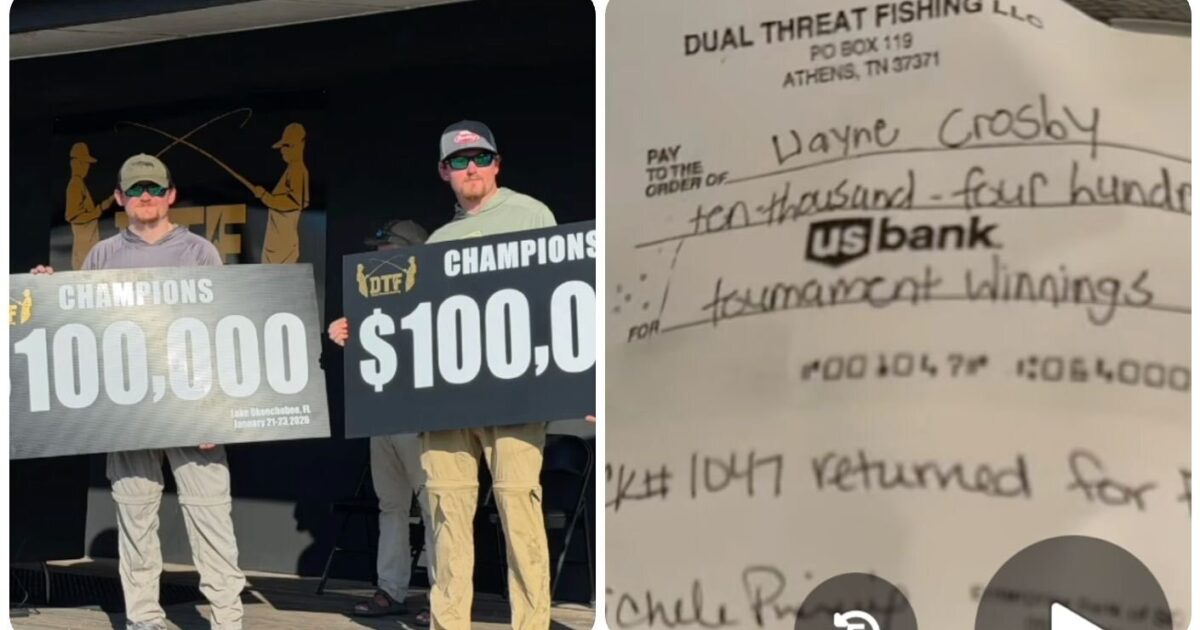
The Dual Threat Fishing Scandal: Unmasking a $1.5 Million Bass Fishing Fraud
The world of competitive bass fishing, celebrated for its camaraderie, skill, and the thrill of the catch, is currently grappling with a scandal of monumental proportions. What began as hushed whispers and online speculation has rapidly escalated into a full-blown crisis, sending shockwaves through the entire angling community. At the heart of this storm is the $1.5 Million Dual Threat Bass Fishing Tournament Fraud Exposed, an alleged scheme that has reportedly siphoned vast sums of money from passionate anglers and sponsors alike.
This situation isn't just about financial loss; it's a deep betrayal of trust within a community built on shared passion. The term "dual threat fishing" here takes on a grim irony, moving beyond its digital counterpart of cybersecurity phishing to describe a deceptive act committed within the very sport it claims to represent. As more details continue to unravel, "receipts" surface, and social media platforms ignite with discussions, the gravity of this potential $1.5 million scam becomes clearer. It highlights a critical vulnerability when passion meets the lure of profit, and the strategies of deception are employed against unsuspecting participants.
The Lure of Deception: Unpacking the $1.5 Million Bass Fishing Fraud
For many, competitive bass fishing is more than just a hobby; it's a lifestyle, a community, and for some, a career. Tournaments offer not only prize money but also prestige, sponsorship opportunities, and the joy of competing. It's this deep engagement that makes the alleged The Dual Threat Fishing Scam: $1.5 Million Fraud Rocks Community so devastating. The reports suggest that organizers behind certain "Dual Threat" branded tournaments may have collected substantial entry fees and sponsorship funds without delivering on promised payouts, or in some cases, even holding the events themselves.
The scale of the alleged fraud, estimated at a staggering $1.5 million, paints a stark picture of systematic deception. What typically happens in such schemes is a slow build-up of trust, perhaps with smaller, legitimate events initially, before scaling up to larger, more ambitious—and ultimately fraudulent—undertakings. Participants invest not just their money but their time, travel expenses, and hopes. When those hopes are dashed, and the promised rewards evaporate, the impact goes far beyond mere financial loss. It undermines the very foundation of fair play and integrity that competitive sports are supposed to embody. The community is now actively seeking answers, with names being brought up and evidence, or "receipts," reportedly beginning to surface, fueling calls for accountability and justice.
A Calculated Catch: The "Dual Threat" Beyond the Bass Pond
The term "dual threat fishing" itself offers a fascinating, albeit dark, parallel to the mechanics of this alleged fraud. In the digital age, "fishing" has gained a notorious second meaning: phishing—cybercriminals casting deceptive emails to "hook" unsuspecting victims. This cyber analogy holds surprising relevance to the bass fishing scandal.
Just as cyber phishers craft enticing messages, often impersonating trusted entities, the alleged fraudsters in the bass fishing world crafted enticing tournament propositions. They used the allure of significant prize money, well-organized events, and perhaps even reputable affiliations as their "bait." The "patience" required in angling, as described in cybersecurity contexts, mirrors the persistence of scammers who might meticulously build a fraudulent operation over time, waiting for the opportune moment to strike or to maximize their "catch."
- The Bait: Promises of large payouts, prestigious titles, and professionally run tournaments.
- The Hook: Entry fees, sponsorship deals, and the trust placed in event organizers.
- The Calculated Approach: Understanding the aspirations and financial willingness of the target audience (anglers and sponsors).
This comparison isn't just semantic; it underscores a universal truth about deception. Whether it’s a meticulously crafted email designed to steal credentials or a fraudulent tournament promising untold riches, the core strategy involves exploiting trust and manipulating desire. The "dual threat" lies in the ability to masquerade a harmful intent within a seemingly legitimate and appealing framework. It's a calculated catch, designed not for sport, but for illicit gain.
The Rippling Effect: Erosion of Trust in the Angling Community
The fallout from the $1.5 Million Dual Threat Bass Fishing Tournament Fraud Exposed extends far beyond the direct financial victims. This scandal creates a profound "environmental impact" on the competitive fishing ecosystem, akin to how rampant phishing erodes trust in digital communications. When a significant fraud occurs, it tarnishes the reputation of the entire sport, making legitimate organizers, sponsors, and participants alike wary.
Anglers, who once enthusiastically signed up for tournaments, might now hesitate, scrutinizing every detail and questioning every promise. Sponsors, crucial for the funding and visibility of these events, may become more reluctant to invest, fearing association with similar scams or simply losing faith in the integrity of the scene. This erosion of trust can lead to:
- Reduced Participation: Fewer anglers entering tournaments, impacting prize pools and event viability.
- Sponsor Hesitation: Brands pulling back from endorsements and financial support, starving the sport of vital resources.
- Increased Scrutiny: Legitimate organizers facing undue suspicion and needing to implement more rigorous (and potentially costly) verification processes.
- Community Division: Blame and suspicion circulating, fracturing the unity that often defines these communities.
For a community that prides itself on sportsmanship and a shared passion, such a scandal is a deep wound. It highlights the importance of integrity, not just in catching fish, but in the organizational backbone of the sport itself. Rebuilding this trust will be a long and challenging process, requiring transparency, accountability, and collective vigilance from all stakeholders.
Navigating Troubled Waters: Protecting Against Future Scams
In the wake of the The Dual Threat Fishing Scam: $1.5 Million Fraud Rocks Community, it's paramount for the angling community to implement robust strategies to prevent similar occurrences. Drawing lessons from both angling wisdom and the principles of cybersecurity, we can foster a more secure environment for competitive fishing.
Practical Tips for Anglers and Sponsors:
- Due Diligence is Key: Before entering any tournament or committing sponsorship, thoroughly research the organizers. Look for their history, past events, and reviews from previous participants. Are their promises realistic?
- Verify Payouts: Demand clarity on how prize money is handled, distributed, and guaranteed. Look for escrow accounts or verified financial institutions handling large sums. Don't rely solely on verbal assurances.
- Check References and Affiliations: Legitimate tournaments often have affiliations with recognized fishing organizations or reputable sponsors. Verify these affiliations directly with the third parties.
- Scrutinize Social Media & Online Buzz: While social media can spread rumors, it can also be a valuable tool for identifying red flags. Pay attention to consistent complaints, unanswered questions, or deleted comments related to organizers.
- Look for Transparency: Reputable organizers are transparent about their rules, financials (within reason), and communication channels. Evasiveness or a lack of clear contact information should be a red flag.
- Start Small: If an organizer is new or unverified, consider participating in smaller, lower-stakes events first to gauge their reliability before committing to major tournaments.
- Report Suspicious Activity: If something feels off, or if you encounter potential fraud, report it to relevant authorities, fishing organizations, and spread awareness within trusted community channels.
Just as an angler must discern real food from a deceptive lure, participants in competitive fishing must differentiate legitimate opportunities from malicious ones. This requires a blend of angling wisdom—understanding the environment and typical behaviors—and cyber-savvy vigilance—actively seeking out discrepancies and protecting oneself from calculated deceptions. By empowering individuals with knowledge and encouraging community-wide vigilance, the sport can begin to heal and protect itself from future "dual threats."
Conclusion
The alleged $1.5 million Dual Threat Fishing Scandal serves as a painful reminder that even within passionate communities, the risk of fraud and deception exists. What began as whispers among the bass fishing community has erupted into a critical discussion about integrity, trust, and accountability. While the investigations continue and the full truth unfolds, the incident underscores the vital importance of diligence, transparency, and collective vigilance. Just as in the digital realm where cyber "fishing" requires constant alertness, the world of competitive angling must adopt robust measures to protect its participants and preserve the integrity of the sport. By learning from this unfortunate chapter, the bass fishing community can emerge stronger, more resilient, and better equipped to navigate the complex waters of modern competition.